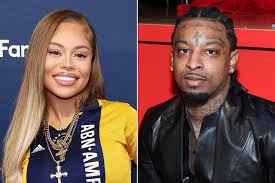
Latto is pregnant. The father is 21 Savage. And somehow, in 2026, that was enough to turn TikTok into a courtroom where millions of strangers decided a woman they've never met made the worst decision of her life.
Within hours of the news circulating, the word was everywhere: bird. Comment sections flooded. Stitches piled up. The takes came fast — not from journalists, not from people who know either artist personally, but from accounts with ring lights and strong opinions about a woman's uterus. The algorithm ate it up. And just like that, a pregnancy announcement became a public trial.
This isn't really about Latto and 21. It's about what happens when people who don't know you decide they own your choices.
TikTok as the New Barbershop — Minus the Nuance
Hip-hop discourse used to live in barbershops, dorm rooms, and late-night phone calls. You'd argue about who had the better verse, who fell off, who was moving wrong. (The Jack Harlow "I got Blacker" conversation is another one where the takes moved faster than the thinking did.) But you were talking to people who could push back in real time. Someone in the chair would say "you're reaching" and you'd have to defend your take or let it go.
TikTok removed the pushback. A 45-second video with a hot take gets stitched by someone with an even hotter take, and the cycle compounds. There's no room for context when the format rewards speed and confidence over accuracy. The loudest voice doesn't win the argument — it becomes the argument.
The Latto situation is a textbook example. Most of the commentary wasn't rooted in any real knowledge of their relationship. People don't know how long they've been together. They don't know what conversations happened privately. They don't know anything beyond headlines and Instagram posts. But TikTok doesn't need facts — it needs a take. And "Latto is a bird" is a take that fits in a caption.
The parasocial element makes it worse. Fans feel like they know these artists. They've watched Latto's interviews, followed her come-up from The Rap Game, streamed her music during breakups and night drives. So when she makes a life decision that doesn't match the narrative they built in their heads, it feels personal. Like a friend who didn't listen to your advice. Except she was never your friend, and you never gave her advice.
The Word "Bird" — Where It Comes From and Why It Cuts
Language doesn't exist in a vacuum. The word "bird" in hip-hop slang has been around for decades, and its meaning has always been gendered. A bird is a woman perceived as lacking intelligence, self-respect, or standards. She makes bad decisions — specifically bad decisions about men. The word reduces a woman's entire identity down to who she's sleeping with or having children by.
What makes "bird" different from other slang insults is its specificity. It's almost never applied to men. A man can have five kids by five different women and the culture will call him a player, a dog, maybe irresponsible — but never a bird. The word exists exclusively to punish women for their romantic and reproductive choices. It says: you should have known better. You should have chosen differently. You belong to the streets.
TikTok turned it into a trend. When thousands of videos all use the same word in the same context, it stops feeling like individual opinions and starts feeling like consensus. That's the danger of algorithmic discourse — it creates the illusion of agreement. Suddenly it's not one person calling Latto a bird. It's everyone. And when everyone says it, it must be true. Right?
Black women getting policed for their choices is older than TikTok. It's older than hip-hop. But hip-hop specifically has a pattern of celebrating men for the exact same behavior it condemns in women. (The Zeus Network conversation is in the same neighborhood — Black women as the product, the punching bag, and the thing nobody wants to protect.) 21 Savage already has kids by other women. The discourse around him in this situation? Crickets. That double standard isn't accidental.
What the Backlash Actually Says About Us
Think about this for a second. A pregnancy announcement generated more outrage than actual harm being done in the industry. People had more energy for Latto's personal life than for the systemic issues in the music business. That should bother you.
It tells us that we've gotten comfortable being spectators in other people's lives. That the line between entertainment and entitlement has blurred so far that a woman's pregnancy becomes content. Something to react to, rank, and recycle into engagement metrics.
It also reveals how deeply internalized certain ideas about women's worth are within hip-hop culture. The backlash isn't really about Latto making a "bad decision." It's about the assumption that a woman's value is tied to the public perception of the man she's with. If the internet collectively approved of 21 Savage as a partner — if his image were different, if his past were different — the same pregnancy would be celebrated. The biology didn't change. The baby didn't change. Only the judgment did.
And the people doing the judging? Most of them are not in Latto's tax bracket. Not in her industry. Not in her life. They are strangers performing concern on a platform that rewards the performance.
The Bigger Pattern
This isn't the first time and it won't be the last. Rihanna caught it when she went back to Chris Brown. Ciara caught it before she married Russell Wilson — people retroactively rewrote her story as a redemption arc, but while she was living it, she was getting dragged. Cardi B has been called a bird more times than anyone can count, and she's a multi-platinum artist running a business empire.
The pattern is always the same: a Black woman in the public eye makes a personal choice, and the internet decides it has veto power. The language changes — bird, pick-me, city girl — but the mechanism doesn't. Public punishment for private decisions.
What if we spent even half that energy asking why we care so much? Why is the instinct to judge instead of just letting people live? I don't have a clean answer. But I know "why would she do that?" is the wrong question when nobody asking it actually knows her.
Where Do We Go From Here?
Latto doesn't owe anyone an explanation. 21 doesn't either. A pregnancy is not a public referendum. And the fact that it became one says everything about the culture consuming the content and nothing about the people living the life.
And if you were in those comment sections — maybe not typing, but nodding along — I'm not trying to call you out. But ask yourself why it mattered to you. What part of you needed to weigh in on a stranger's pregnancy? What would it cost you to just... not?
Hip-hop has always been a culture of opinions. That's part of what makes it alive. But there's a difference between having an opinion and weaponizing a word against a woman for being human. The barbershop had boundaries. The algorithm doesn't. So the boundaries have to come from us.